07 Jan
Roman Marble Pool and Ancient and Medieval Coins and Seals Discovered During the 2025 Excavations at Aquae Calidae
 In December 2025, archaeological excavations at the Aquae Calidae – Thermopolis archaeological complex were successfully completed. The excavations were funded by Burgas Municipality. The main phase of the research took place between July and September and aimed to uncover the northeastern part of the Roman and Early Byzantine bath. The team's work continued the excavations of the interior of the bath complex begun in 2022, and in 2025 the research extended to the south and southwest, reaching the Turkish bath itself and the modern service buildings.
Despite difficulties caused by the high groundwater level, very significant results were achieved. Brick floor levels around an ancient and medieval pool continued to be uncovered, a facility for open running water was identified in the southeastern corner of the nymphaeum, and new elements of the northern wing of the Early Byzantine bath were revealed. In this area, parts of a medieval church were also uncovered, along with a rich medieval cultural layer containing numerous finds: pottery, coins, seals and bone material. One of the most important discoveries of 2025 is part of a Roman marble pool beneath later ancient and medieval alterations. An archaeological test trench revealed three preserved steps of polished marble, which correspond to a pool partially excavated back in 2015. Its full excavation is still to come and depends on future opportunities to remove modern structures built on top of it. At the same time, between October and early December, an archaeological survey was carried out on a plot where Burgas Municipality plans to build an outdoor open-air pool. The survey confirmed the presence of a dense medieval cultural layer from the 11th–13th centuries, similar to the one identified in previous excavations in this area.
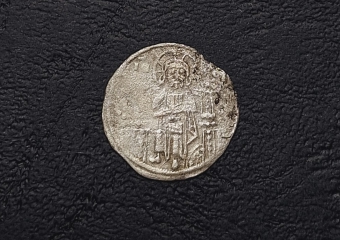
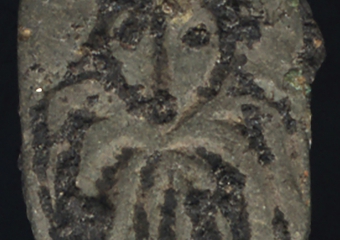
The finds include numerous coins, medieval lead seals and a wealth of Byzantine decorated pottery from the 10th–13th centuries. Some of the seals are firmly dated to the 11th century (as, incidentally, are most of the seals found so far), while several others date to the 10th–11th centuries. Among them are a seal of the patrikios Nikolaos, another belonging to a strategos, and the most recently found seal, which is associated with the 10th-century Bulgarian ruler Tsar Peter. Imports of 12th-century Persian celadon were also recorded, as they have been continuously in previous years. A coin of Emperor Leo VI is a rarity for the region. A large number of ancient coins were found in the area of one of the pools (coins from Mesambria and Apollonia Pontica together account for more than a third of all coins), while the medieval layer shows an increased presence of coins of Emperor Alexios I Komnenos (1081–1118), and above all of coins from the 1220s and 1230s. The excavations once again show that the Aquae Calidae complex was used and rebuilt over many centuries, with ancient, Byzantine, Bulgarian and Ottoman construction phases layered on top of one another. Some of the archaeological structures were damaged by later construction work and the building of modern infrastructure. These processes reflect the complex history of the site and the challenges of balancing its preservation with its continued use.
Trending Posts
Comments
comments powered by Disqus